
Services / Moss & debris removal
Moss & Debris RemovalIn Bury
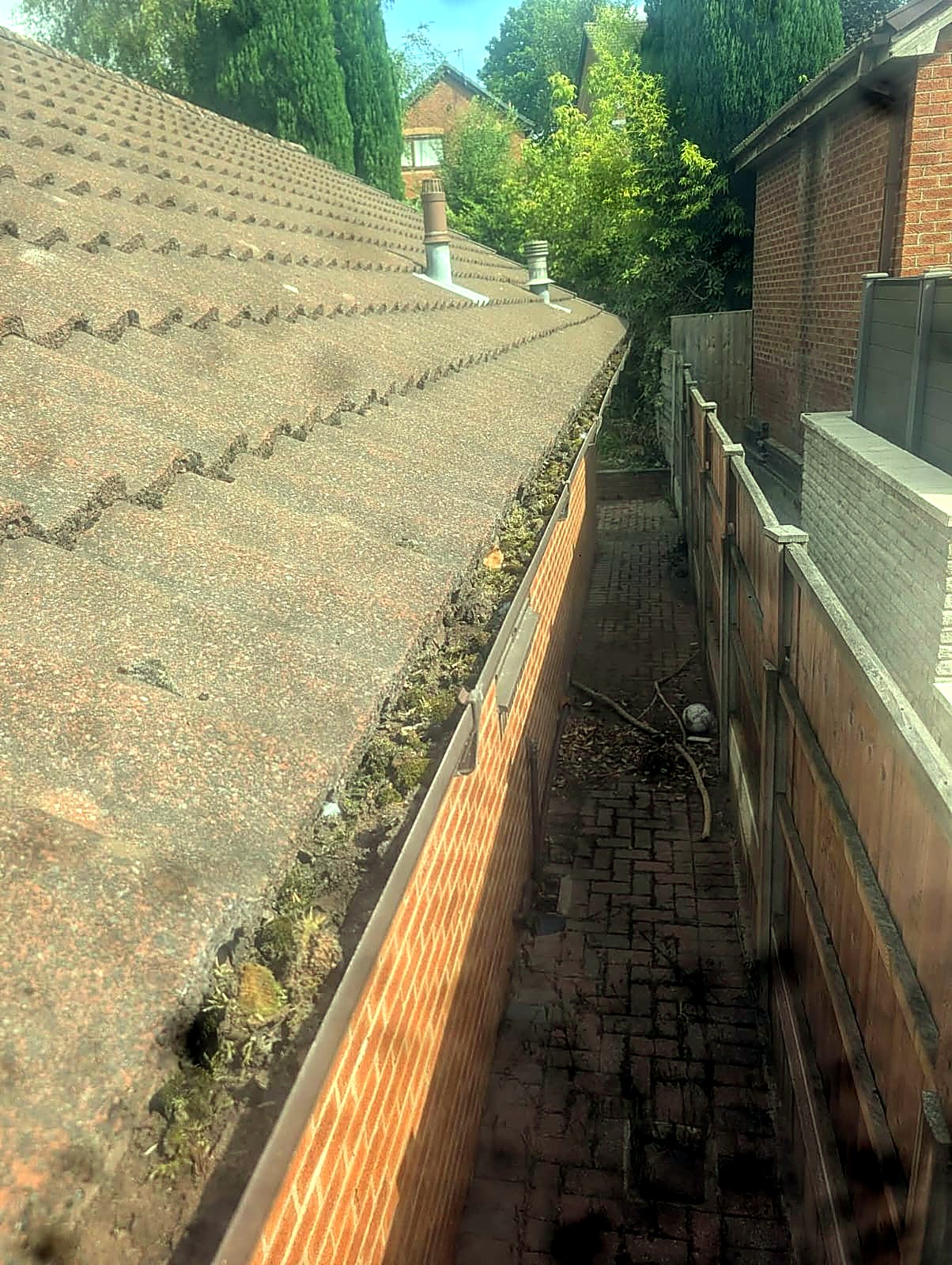
Compacted moss, silt and leaf litter vacuumed out of the run and the flow re-tested, the heavy build-up that ordinary scooping leaves behind.
From £59 · Most cleans next day · 15 years in the trade
15 years
in the roofing trade
£5m
public liability cover
Next day
for most gutter cleans
From £59
gutter cleaning
Moss & debris removalOn Real Jobs
Moss & debris removal explained
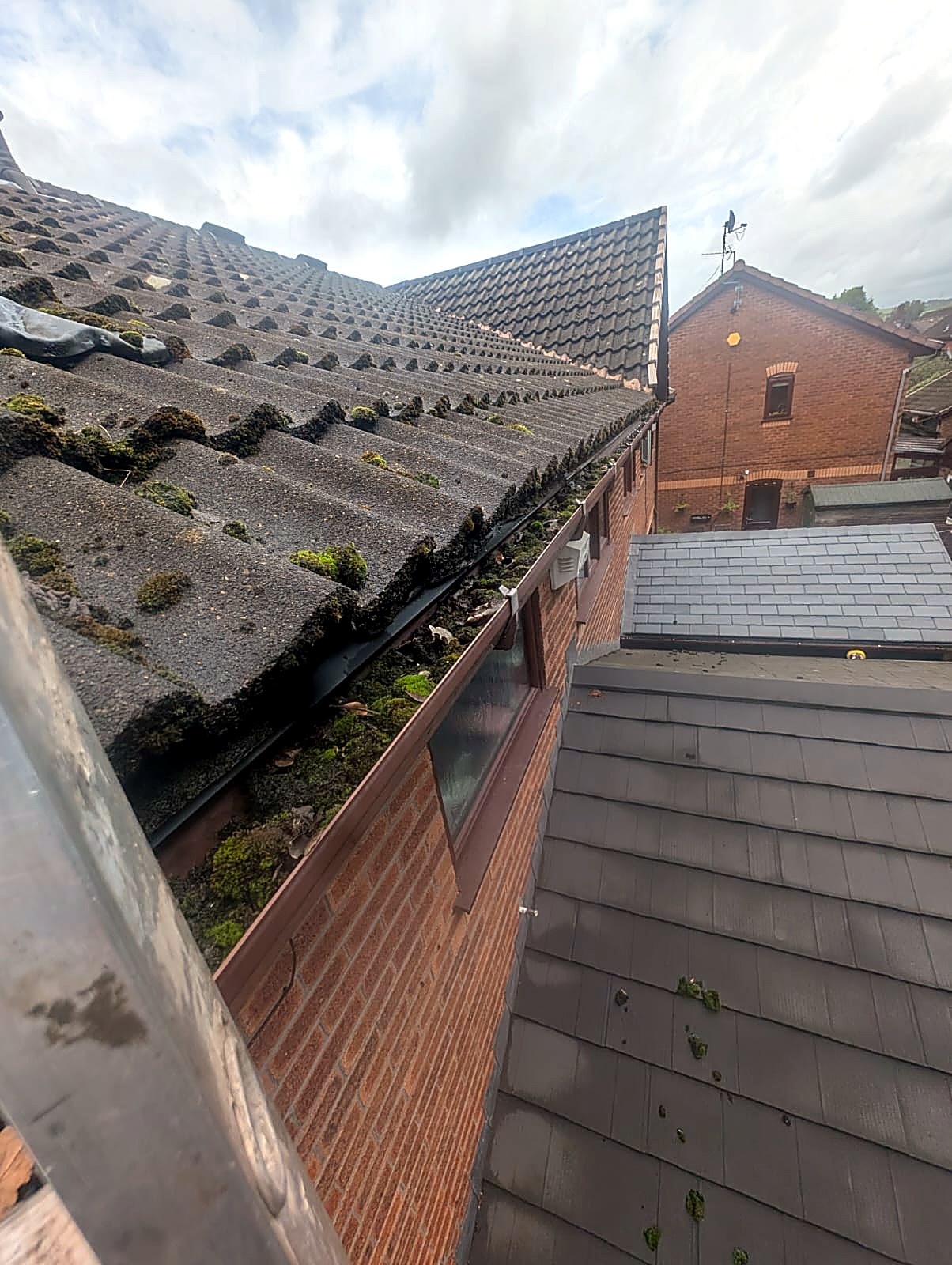
Moss and debris removal is the clearing of heavy, compacted material out of the guttering: moss washed down off the roof, silt and roofing grit, and years of leaf litter that has broken down into something closer to soil. It is the harder end of gutter cleaning, and it needs a different approach to a light autumn clear.
Moss holds a great deal of water, so a run packed with it is heavy as well as blocked. It is also stubborn, once it has compacted and started to root, it comes out in mats rather than handfuls. Depending on the property this is dealt with by vacuum, by hand from a ladder, or both, then the run is flushed and checked for flow.
Because the material comes off the roof, this work almost always points at something worth knowing about the roof covering itself, which is where the included roof and gutter check-over earns its place. Anything found is photographed and reported.
Who it is for
- Gutters with visible moss mounded up above the channel edge
- Properties with north-facing or shaded roof slopes where moss thrives
- Runs that have not been cleared in several years
- Gutters with grass, weeds or seedlings growing in them
- Older roofs shedding mineral grit into the guttering
- Runs sagging under the weight of wet compacted material
What's included
- Compacted moss, silt and leaf litter removed
- Run checked for flow once cleared
- Ground swept and left tidy
What happens if it is left
Compacted moss does not just block a gutter, it loads it. Saturated moss is heavy, and a full run of it pulls on every bracket along the length. That is why moss-heavy properties tend to have sagging runs, pulled fixings and split joints as well as an overflow, the damage is structural, not only hydraulic.
It also keeps the channel permanently wet. Seals sitting in wet debris harden and let go, and in winter the mass freezes and expands, forcing joints apart and splitting the base of the channel. The gutter is effectively being worked to death from the inside.
Then there is what moss in the gutter tells you about the roof. Heavy shedding usually means moss growth on the covering and, on older roofs, a surface that is breaking down. Left alone, that same debris blocks the outlet, backs water up against the felt at the eaves, and puts water into the roof edge rather than the drain.
Common mistakes
- Scooping the loose top layer and leaving the compacted mat underneath
- Pressure washing the roof so all the moss lands in the gutter at once
- Blasting the gutter with a jet wash, which packs the outlet and the downpipe
- Leaving the downpipe untouched after clearing a heavy moss build-up
- Ignoring the sag that the weight of the moss has already caused
- Applying chemicals to the roof with no plan for where the debris goes
How the WorkIs Carried Out
Step 1
Free quote, no call-out charge
Send photos of the guttering with your address or postcode, or ask for a site visit. You get a fixed price before anything is booked, and there is no charge for the quote either way.
Step 2
Assess the build-up
How compacted the material is, how much weight the run has been carrying and whether the channel has already dropped are all checked before clearing begins.
Step 3
Removed, not pushed along
Compacted moss, silt and litter are vacuumed or lifted out by hand rather than driven towards the outlet, so nothing ends up plugging the downpipe.
Step 4
Flow re-tested
The run and downpipe are flushed and watched through to the gully, and the fall is checked since heavy material often leaves a dip behind.
Step 5
Photos, tidy up, guarantee
Before-and-after photographs are sent to you as proof of the work, the ground is swept up, and the job is backed by a satisfaction guarantee. Card, cash or bank transfer.
What you get out of it
Weight off the run
Removing saturated moss takes real load off brackets, joints and the fascia behind.
Cleared to the base
The compacted mat is removed, not just the loose material sitting on top of it.
Downpipe protected
Debris is taken out rather than flushed into the outlet, which is how downpipes get plugged solid.
Roof insight included
Heavy moss usually says something about the covering, and the included check-over reports it with photos.
Flow proved
The run is re-tested to the gully once cleared, and any lost fall is flagged.
Left tidy
Ground swept, debris removed, nothing left in the borders or on the drive.
Moss & debris removal in detail
Why moss ends up in the gutter
Moss grows readily on shaded, north-facing and damp roof slopes, and the climate around Bury, Bolton and the Pennine fringe suits it. Rain and wind wash it off the covering and it collects at the lowest point available, which is the gutter.
On older concrete tiles and mineral-finished coverings the surface itself breaks down over time and sheds grit, which mixes with the moss into a dense silt. That mixture is far heavier and more stubborn than leaf litter, and it is what a light seasonal clear tends to leave behind.
How compacted material is removed
A gutter vacuum with the right head lifts wet silt and moderately compacted moss efficiently and keeps weight off the channel, which matters on a run that is already sagging.
Where the mat has rooted or turned to turf, ladder work and hand removal are the only reliable way, lifting it out in sections. Heavy build-up is generally cleared in stages so load comes off the run gradually rather than in one lump, and the ground below is protected and swept afterwards.
What often needs doing afterwards
Once years of moss are out, the true condition of the run is visible for the first time, dips where the weight sat, split sections, hardened seals, brackets that have let go. Those are photographed and quoted separately as repair or realignment rather than being quietly left.
The channel base and the outlet are checked in particular, since that is where the load and the moisture have been concentrated longest.
Keeping it from returning
Where a roof sheds a lot of moss, twice-yearly clearing is the practical answer, one visit after the autumn leaf fall and one in spring once winter rain has washed the roof down.
Leaf mesh helps against leaves and larger debris, though fine silt and grit will still pass, so guarded runs on moss-heavy roofs are still checked annually. Roof and soffit washing is not currently offered, so where the covering itself is the problem you get an honest report and photos to take to a roofing contractor.
Moss & debris removal across Bury, Bolton and Greater Manchester
Based in Bury, Greater Manchester and covering the surrounding towns. If your postcode is not listed, it is often still covered, see the areas covered page, or the homepage for an overview of the whole service.
Moss & debris removal:Your Questions Answered
It falls under gutter cleaning, which starts from £59, with heavier compacted build-up priced according to the length, the height and how bad it is. Quotes are free with no call-out charge.
Related services
Gutter cleaning
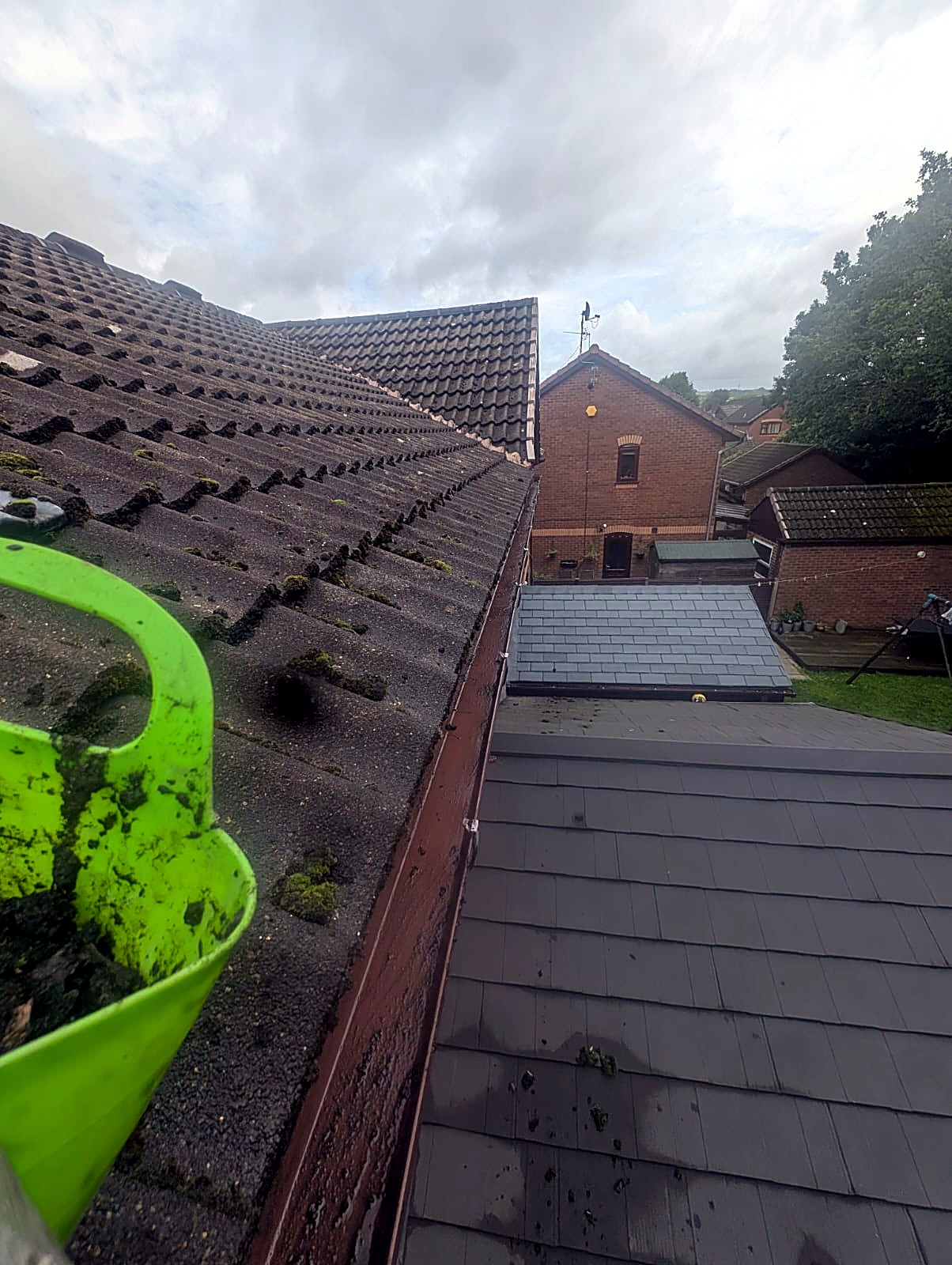
Vacuum and ladder cleaning from £59, with before-and-after photos.
View service →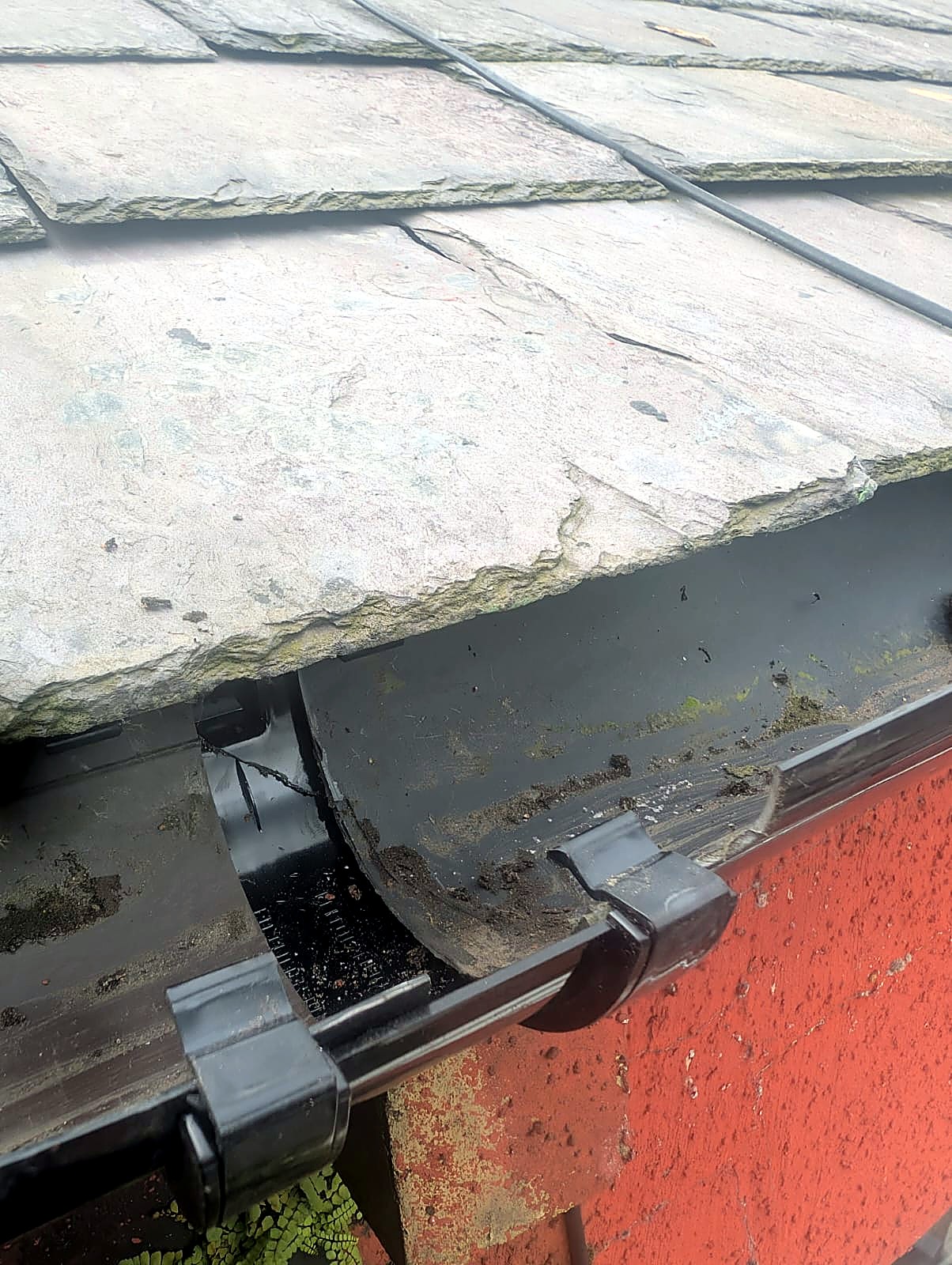
Gutter repairs
Leaks, splits, sagging runs and failed joints put right.
View service →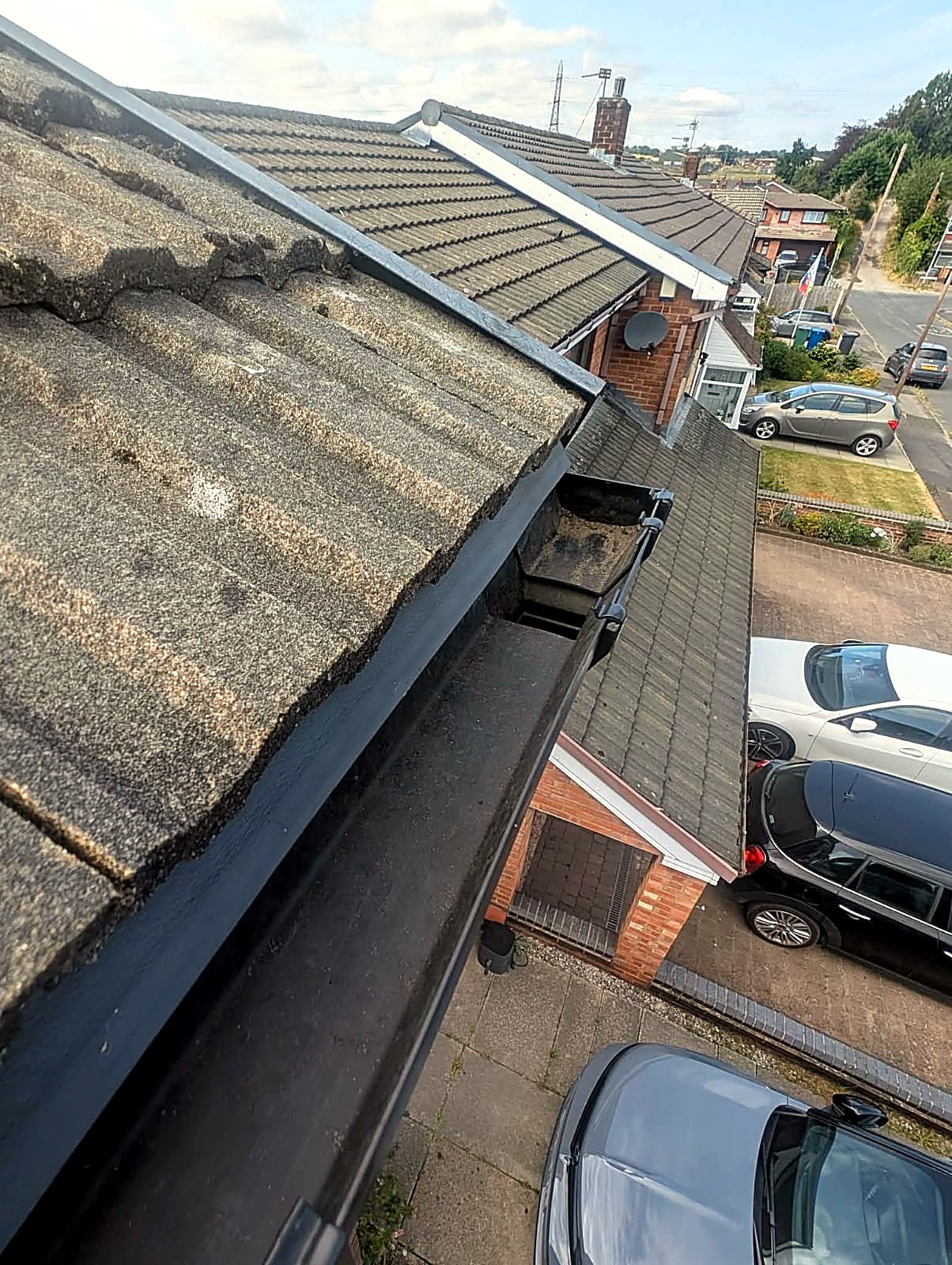
Gutter replacement
Full or partial replacement runs on one to three-storey homes.
View service →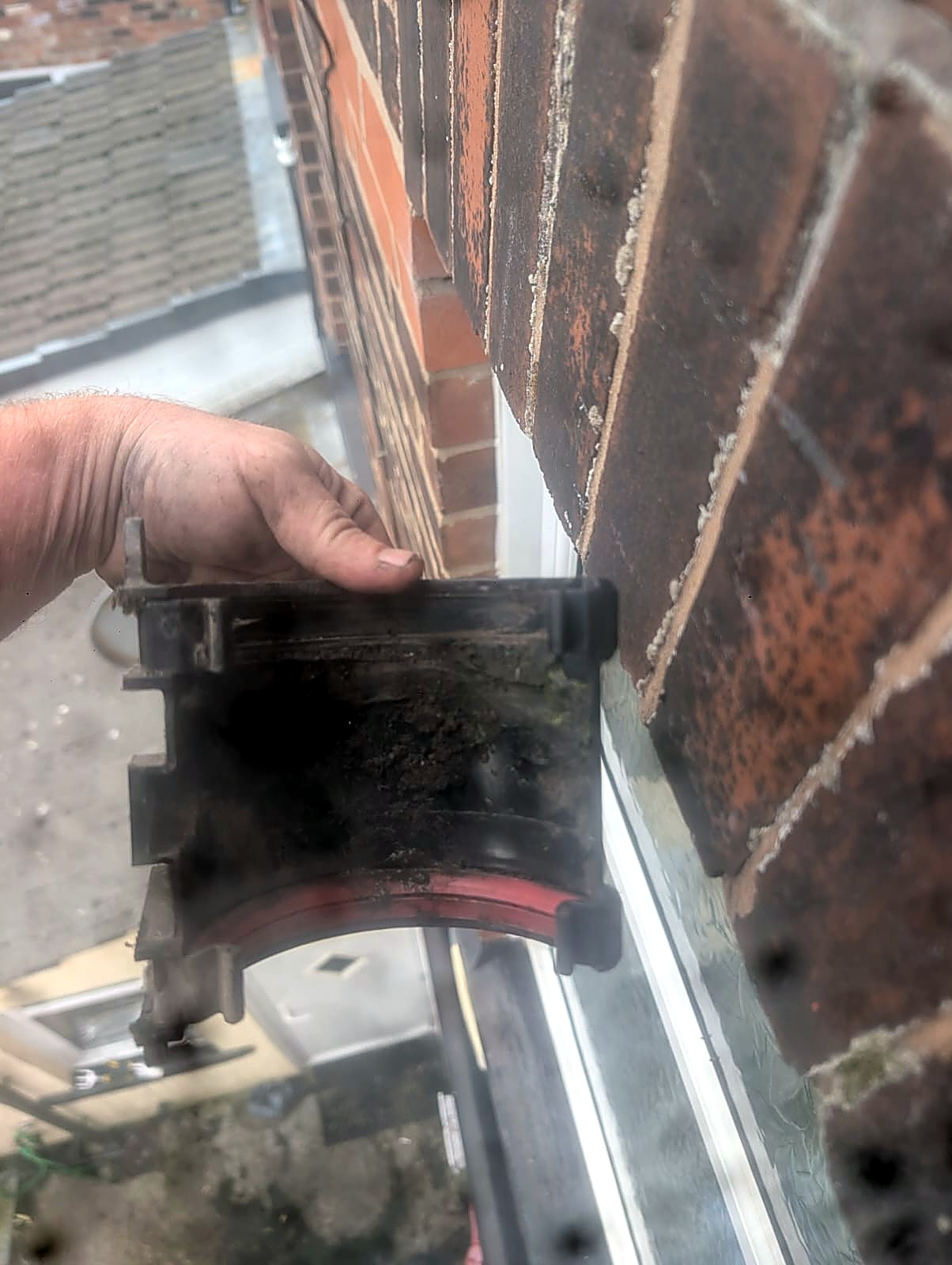
Downpipe unblocking & flushing
Blocked downpipes cleared and flushed through.
View service →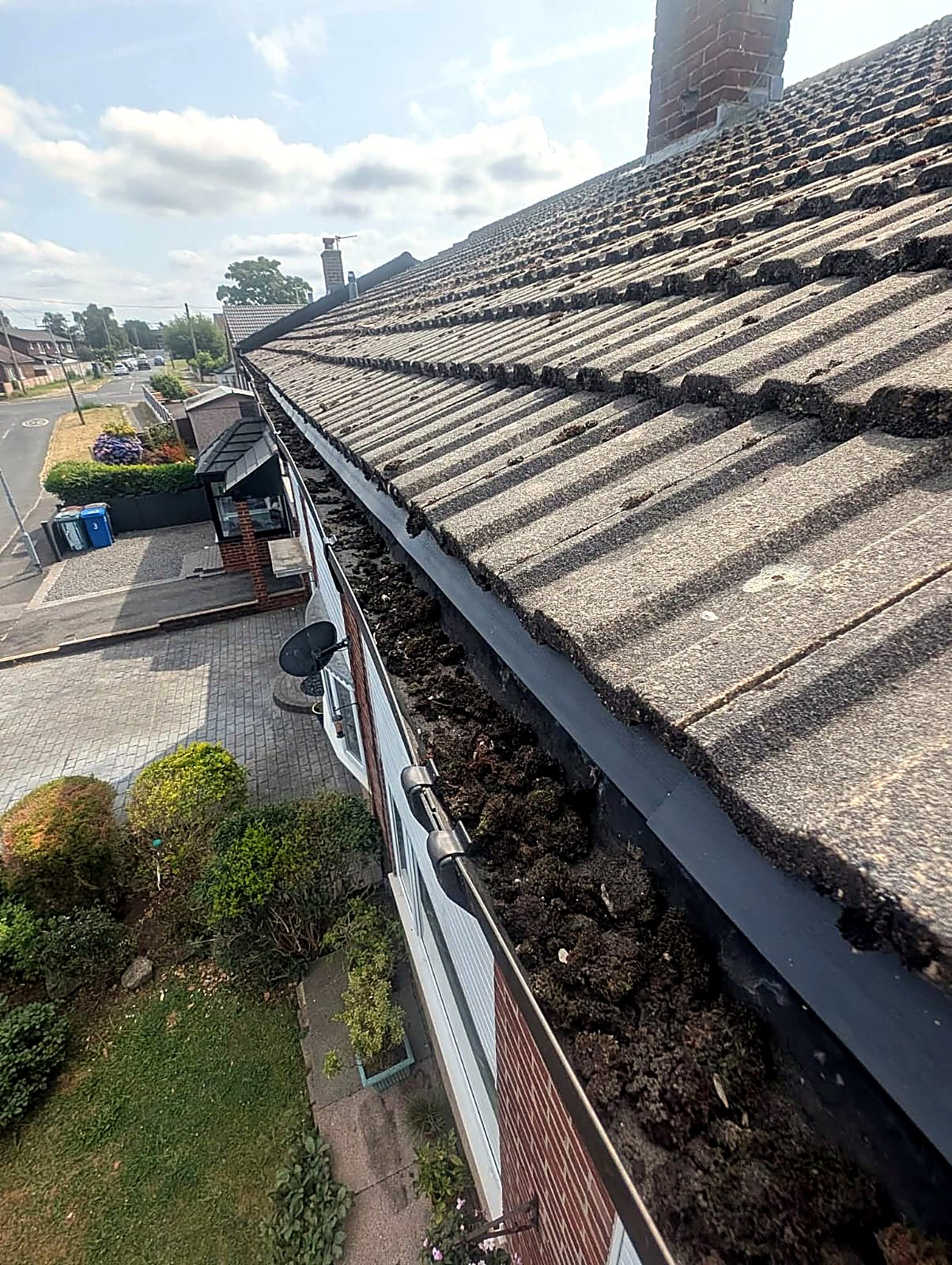
Roof & gutter check-over
Included with every clean, issues spotted while up there.
View service →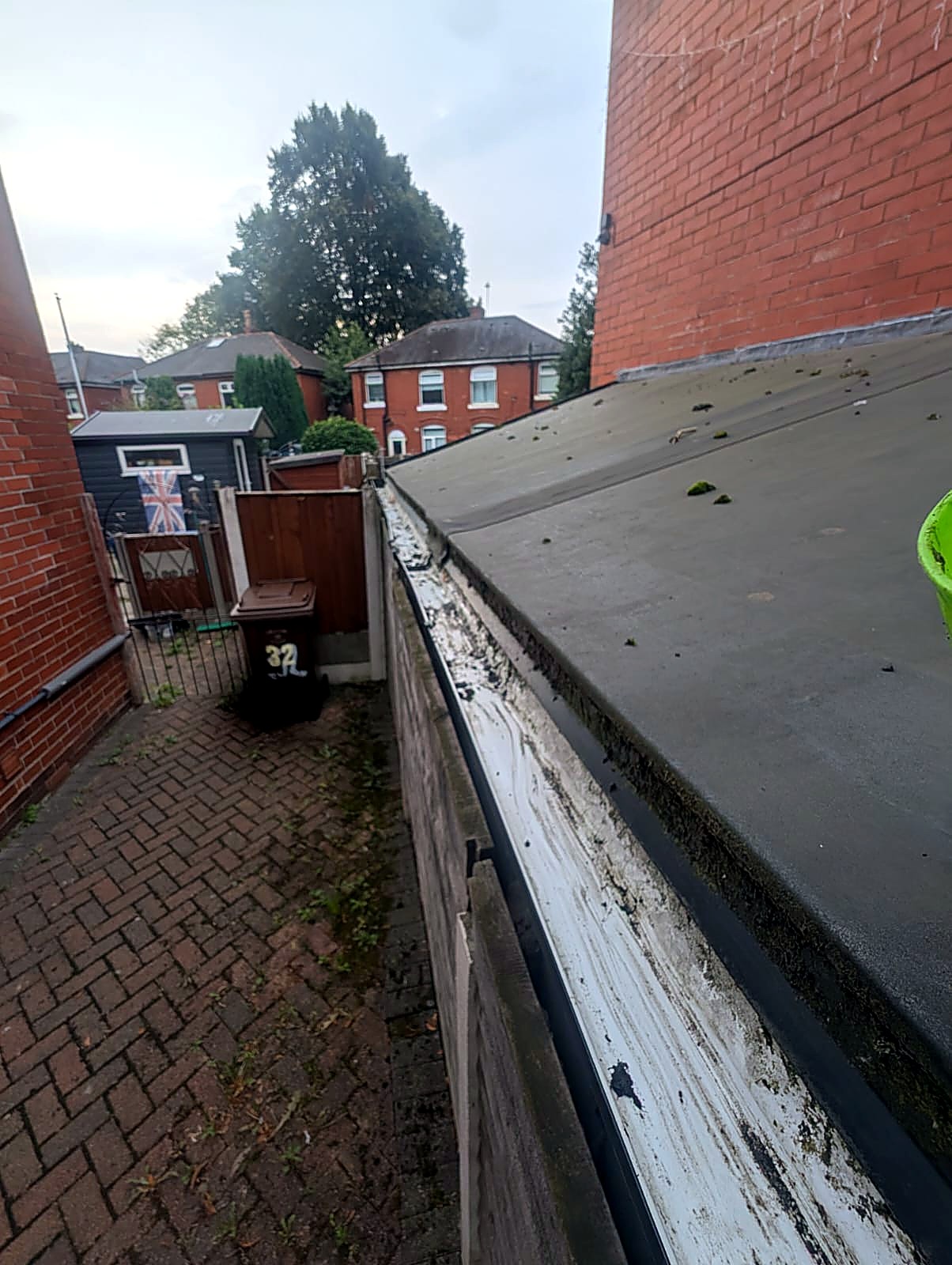
Gutter realignment & re-securing
Sagging, dropped or pulled-away runs reset and re-fixed.
View service →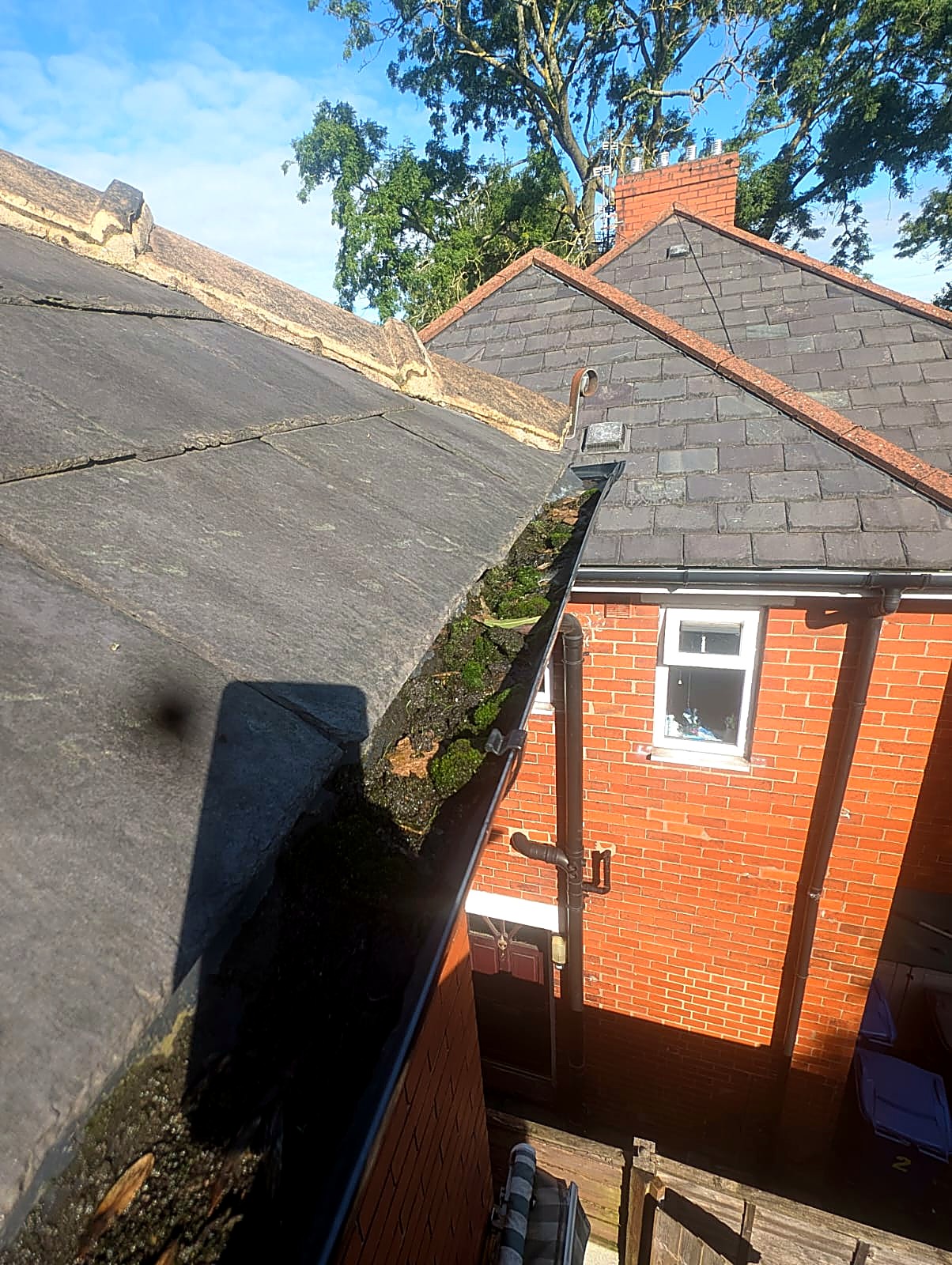
Need moss & debris removal?
Free quote with no call-out charge, £5m public liability cover, before-and-after photos on every job, and most cleans booked for the next day.